When the Leaves Drop: Late-Autumn Roe Stalking Done Properly
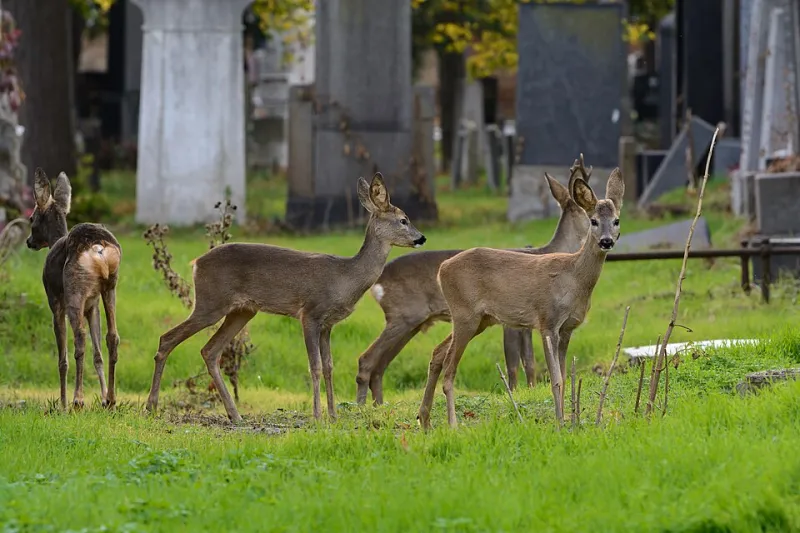
Photo: Uoaei1, CC BY-SA 4.0, via Wikimedia Commons
November is the month when roe stalking stops being a gentle autumn amble and turns into a proper test of patience. The leaf is off the trees, the grass is flat and wet, and every roe deer in the parish seems to have read the same memo: keep your head down, stay near cover, and make the stalker work for it. That is not a reason to stay home. It is a reason to slow down.
Here at Letz Go Hunting, we reckon late-autumn roe are some of the most rewarding deer to stalk in the UK. They are not stupid. They have been pressured since the summer, the bucks are recovering from the rut, and the does are shifting into winter mode. If you can read that shift, November can be brilliant.
What changes in November
The biggest change is that roe stop behaving like scattered summer animals and start thinking about shelter and food in a more deliberate way. Does and late fawns may be in small family groups. Bucks can be looking ragged after the rut, feeding hard to recover condition. They will use sunny edges, sheltered glades and the lee side of hedges when the wind is raw. You will often find them in the same few spots day after day, which is good news: once you find fresh sign, treat it like a map.
Also remember the legal season. In England and Wales the roe doe season opens on 1 November, while the buck season is closed. In Scotland the dates are different, and Northern Ireland is different again. Do not rely on pub gossip. Check the current legislation for 2026, your local authority guidance and your permission conditions before you go. If in doubt, leave the rifle in the cabinet.
Fieldcraft: glass first, walk second
The classic mistake in November is to cover ground too fast because it is cold and you want to stay warm. Fight that. Roe are masters at sitting tight in cover, and a wet, quiet field is perfect for them to hear you squelch. Spend more time glassing than walking. Pick apart hedgerows, woodland edges, young plantations and rough grass. Look for the horizontal line of a back, an ear twitch, a white rump patch in the gloom. Binoculars are not optional.
Use the wind like it is a tool. If the wind is doing something odd, stop and reassess. A good stalk is mostly a series of small decisions: which hedge to follow, which gate to avoid, where the ground rises enough to give you a view without skylining yourself. Keep your silhouette broken. Move when the deer are feeding or when a gust covers your noise. Stand still for longer than feels natural. Roe often look up at the exact moment you think you have got away with it.
Scent control and the boring bits
You do not need to turn into a scent-obsessed tactical ninja, but you do need to be honest about wind. Wash your outer layers in a non-biological detergent, keep your boots out of the kitchen, and store your kit somewhere neutral. That is about it. The real scent control is not walking through the middle of the field with the wind at your back. Approach from the downwind side, or at least crosswind, and accept that some days the deer will win.
Cold hands make bad decisions, so keep gloves thin enough to feel a trigger and a safety. A handwarmer in a pocket is not cheating. Neither is a flask. The stalker who is shivering is the stalker who rushes the shot.
Reading winter behaviour
In late autumn, roe often feed in shorter, sharper bursts. They may be out later in the morning and earlier in the afternoon than in high summer, especially on cold, bright days. Sheltered south-facing slopes warm up first, and that is where the grass and browse will be. After heavy rain, look for edges that drain well. After a hard frost, look for the sunny side of the wood.
If you find a doe group, do not assume there is a buck nearby, but do not ignore the possibility either. Watch the edges and the thicker cover. The old buck may be lying up separately, especially if he is tired from the rut. Give yourself time to glass the whole picture before you commit.
Kit for wet, cold November
You do not need to spend a fortune, but you do need to be dry. A quiet waterproof shell, decent thermal mid-layer, wool or synthetic base layer, and boots with actual grip are the basics. Add a small rucksack with a knife, drag rope or carcass sled, first aid kit, headtorch, phone, permission letter and a compact waterproof bag for the gralloch. A rangefinder is useful; a laser rangefinder and a steady rest are more useful than a fancy bipod you never deploy. Take a spare pair of gloves. Take a thermos. Take more patience than you think you need.
Shot placement and the legal bit
Ethical shot placement starts before you raise the rifle. Get steady, range the deer, wait for a broadside or slightly quartering-away presentation, and aim for the heart and lung area just behind the shoulder. Do not take head or neck shots unless you are genuinely experienced and have a rock-solid rest at a sensible range. Never shoot at a running deer. Know what is behind your target and never shoot near a footpath, road or house without absolute certainty.
For 2026, check the minimum legal calibre and bullet energy for roe in your part of the UK, the legal shooting hours, and the conditions of your firearm certificate and permission. Make sure you have insurance and a sensible plan for recovering and handling the carcass. If you are new to it, go out with an experienced stalker first. The law is not a suggestion.
Final thoughts
Late-season roe stalking is not about heroics. It is about being quiet, being warm, and being honest with yourself about the wind. The deer are there. They are just playing a tighter game. Slow down, glass more, and enjoy the fact that the British countryside in November is still one of the best classrooms going.
Good hunting, and stay safe.