Steady Wins: Building a Calmer Gundog Before the Season Returns
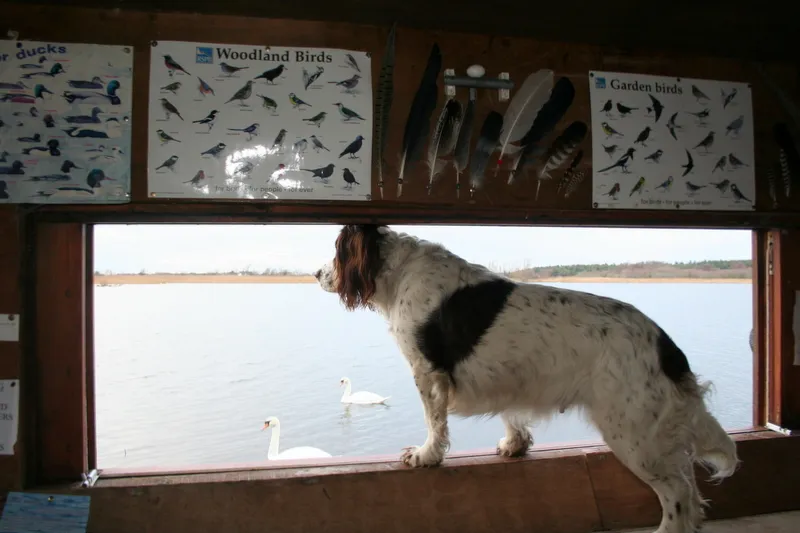
Photo: Des Colhoun , CC BY-SA 2.0, via Wikimedia Commons
The dog that says nothing
There is a particular kind of peace on a rough shoot when the dog beside you is not squeaking, straining or trying to invent a new way to leave your boot prints behind. It is not a dog that has had the spirit trained out of it. It is a dog that has learned what to do when the birds flush, the gate opens or a ewe looks at it sideways.
That is the job in the closed season. Not fitness for the sake of it. Not drilling the dog until it switches off. Just short, repeatable work that makes the opening day feel like a continuation rather than a surprise.
Why quiet beats quick
A lot of steadiness problems get blamed on drive. More often they are about confusion. The dog has never been shown, clearly and kindly, what the right answer looks like when there is something more interesting happening ten yards away.
Reward-based training does not mean vague. It means the dog gets paid for the behaviour you want, and the behaviour you do not want gets managed rather than punished. That might mean a lead, a long line, a pocket full of chopped sausage and the good sense to start three fields away from the sheep rather than three feet.
A quiet dog is a safer dog. It is less likely to run through a fence, knock someone over at a gate or blow through the beating line because its brain has left the building. That is not softness. That is a working partnership.
Drill one: livestock manners
Start at a distance where the dog can see livestock but can still hear you. If it cannot take a treat, you are too close. Use a fence line or a quiet corner of a field. Keep the session to five minutes.
Ask for a sit. Mark and reward the moment the dog looks away from the sheep and back to you. Repeat. Then walk a few paces nearer, ask for the sit again and reward calm. If the dog locks on and stops taking rewards, walk away, increase the distance and try again another day.
Do not let the dog practice the chase. A dog that gets to run at livestock learns more in three seconds than you can undo in three weeks. A long line is not a failure. It is a seatbelt.
Drill two: gate manners
Gates are where good dogs get ruined. Someone opens a gate, the dog sees an open field and the next thing you know it is halfway to the horizon with a whistle bouncing off the hedge.
Practice with two people if you can. One holds the dog on a lead or long line. The other opens the gate. Ask for a sit and reward the dog for staying there while the gate moves. Then walk through together, ask for another sit on the far side and release the dog only when you mean it.
Build up to a stile, a vehicle tailgate and a farm gate with a quad bike waiting. Keep the rewards coming. The aim is not a robot. The aim is a dog that understands that gates are a place to pause, not a starting pistol.
Drill three: game cover steadiness
You do not need live game to teach this. A dummy in light cover, a tennis ball in a hedge and a friend rustling a branch are enough.
Start with the dummy visible. Ask the dog to sit. Reward the sit. Then send the dog for the dummy only on your cue. If it breaks, reset with less temptation and more distance. Next session, hide the dummy in cover and repeat. The dog learns that the flush is not the command and the retrieve is not a race.
Keep a stop whistle in the mix, but do not overuse it. A whistle that means stop and a hand signal that means sit are worth more than a dozen shouted commands. Reward the stop, even if the dog only stops for a second.
A simple closed-season week
You do not need to train every day. Three short sessions and a couple of quiet walks will do more than a miserable Sunday spent drilling in the rain.
- Monday: ten minutes of livestock distance work. Reward looking away and checking in.
- Tuesday: rest or a sniffy walk. Let the dog be a dog.
- Wednesday: gate drill in the yard or at a quiet field gate. Five minutes, high-value rewards.
- Thursday: stop whistle and sit at ten yards. Build distance slowly.
- Friday: dummy in cover. One or two retrieves only, finished while the dog still wants more.
- Saturday: a normal walk with a few sits and recalls mixed in.
- Sunday: rest.
Write down what worked and what did not. Dogs are not machines and neither are we. If the dog has a bad day, shorten the session and end on an easy win.
The quiet dog pays you back
By the time the season comes round, you want a dog that can stand beside you at a gate, watch a flock of sheep without losing its mind and sit while game cover is being worked. That dog is not quieter because it has been shut down. It is quieter because it has been taught.
And on a cold morning in the beating line, that is worth more than any shortcut in the catalogue.