Cut, Pleach and Leave It Alone: Laying a Boundary Hedge That Holds Game
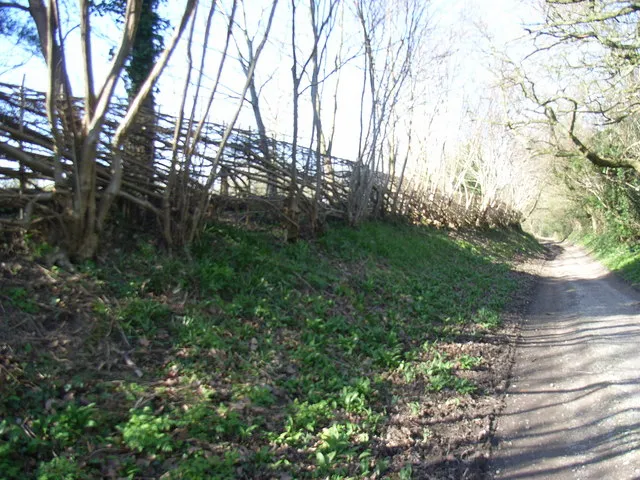
Photo: David Gibbs, CC BY-SA 2.0, via Wikimedia Commons
Most shooting people inherit hedges in one of two states: flailed within an inch of their lives every autumn, or untouched for fifteen years and now a line of leggy trees with a gap at the bottom. Neither is much use to a pheasant poult, a yellowhammer or a farmer counting his boundaries. Laying fixes both, and it is one of the few bits of countryside work where a complete amateur can do something genuinely good in a single afternoon.
Why bother, in plain terms
A laid hedge is dense at the base. That density is the whole point. It gives nesting songbirds somewhere a magpie cannot walk into, gives gamebirds shelter from the wind and the wet, and gives insects a litter layer to overwinter in — which is chick food in May. It also, and this matters on a working farm, becomes stock-proof again without a strand of wire in sight.
For a shoot, the value is cover. A laid hedge along a downwind boundary will hold birds in weather that pushes everything else into the open. It is not glamorous work and nobody will film it, but it does more for your holding than another feeder.
Timing is tighter than the books suggest
The traditional window is November to early March, outside the bird nesting season. In practice, on wet heavy land, you want to be off the job by the end of February, and ideally finished before a hard frost sets the sap back. Cutting and pleaching in freezing weather does the plant no favours.
Avoid the temptation to do it in a mild dry autumn. Hawthorn and blackthorn will sometimes throw growth from the pleachers if cut too early and too warm. Late December into February is the honest slot for most of the country.
Tools that earn their keep
You do not need much, but what you need must be sharp.
- A good billhook. The single most important item. A dull one is more dangerous than a sharp one because you swing harder.
- A bowsaw or a decent pruning saw for the stems too big for the hook.
- Loppers for tidying and for the brash.
- A stout pair of gauntlets and boots with some grip.
- Two stakes and some binder twine for the first few yards, to hold the finished work until it knits.
A chainsaw is useful on overstood hedges with stems over four inches, but a novice and a chainsaw in a tangle of blackthorn is a poor combination. Work up to it.
The cut that doesn't kill
This is the part people get wrong. You are not felling stems. You are cutting most of the way through near the base, on the side you want the stem to fall towards, leaving a hinge of bark and live wood maybe an inch or so thick. That hinge keeps the plant alive and lets you bend the stem over without snapping it.
Lay the pleachers at a shallow angle — roughly thirty degrees from horizontal, leaning in the direction of travel — and stagger them so the stems overlap. Tuck the tops under the one in front. The finished hedge should look like a row of fish scales, not a pile of sticks.
Leave the cut face clean and angled so water runs off. Do not bash it about; a bruised hinge rots.
What not to do
Do not lay more than about two-thirds of a hedge in any one year — leave a stretch standing to carry the wildlife through. Do not clear every bit of brash; a little at the base is habitat and moisture. Do not lay blackthorn in a hurry unless you enjoy infection and tetanus boosters.
And do not flail the finished job in the autumn. Give it three or four years to knit before anything with a rotor goes near it, and then trim only the sides and the top, ideally in late winter.
A realistic first project
Pick a boundary of no more than thirty metres, ideally one you can see from a vehicle so you have no excuse not to look at it. Allow a full day for two people, and expect to be slower than you think for the first ten metres.
- Clear the base on both sides with loppers, so you can see what you are working with.
- Mark your line with two stakes and run a string along the intended finished height.
- Work in one direction, cutting and bending as you go, keeping the tops of the laid stems pointing away from you.
- Deal with gaps as you go by pegging in a spare pleacher, or plan to plant whips there next winter.
- Finish with a light tidy, then walk away.
If the hedge is a mix of hawthorn, hazel, field maple and the odd dog rose, so much the better. Monoculture hawthorn is fine but duller for wildlife.
The legal and neighbourly side
In England and Wales the Hedgerows Regulations 1997 mean you must notify the local authority before removing a hedgerow, and there are protections for 'important' hedges. Laying is not removal, but if you are doing anything more than routine management on a boundary that is not yours, ask first — and put it in an email.
Remember too that the nesting bird protections under the Wildlife and Countryside Act 1981 apply year round in practice: if you find an active nest, stop.
If the ground is under an agri-environment scheme, check what your agreement says before you cut. The rules are not always what the farmer remembers.
The bit nobody mentions
The first year it looks a mess. That is normal. By the third, the laid stems have thrown vertical growth from the hinge, the base has thickened, and you will see more birds along thirty metres of laid hedge than you ever did along four hundred metres of flailed box.
That is the return. It just takes three winters to arrive.