The Permission Interview: Questions to Ask Before You Commit to New Ground

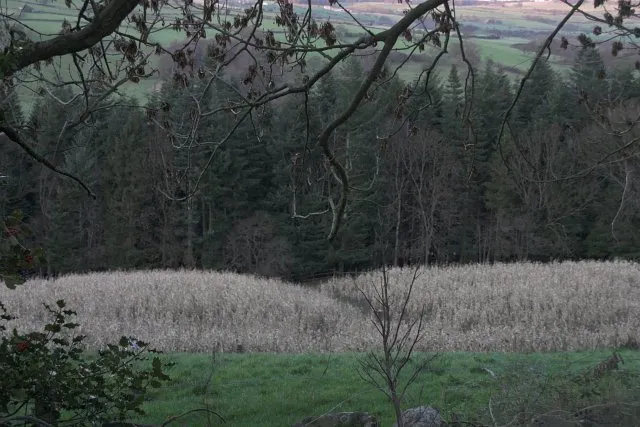
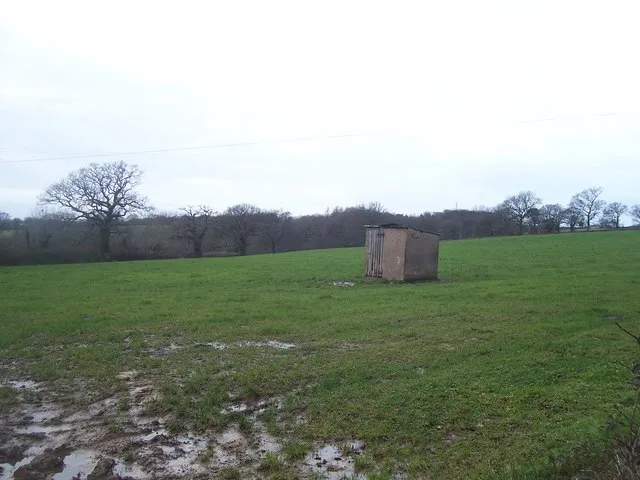
Photo: Downtowngal, CC BY-SA 3.0, via Wikimedia Commons
There's a particular phone call that sounds like a gift. A friend of a friend has a few hundred acres, wants the pigeons thinned and the foxes kept off the lambs, and would be glad of someone trustworthy with a rifle. No money changes hands. You're in.
Or you're not. Not yet, anyway. The trouble with a permission offered warmly is that warmth isn't the same as clarity, and a bad bit of ground will cost you far more than a missed season. It costs you a name. In our world, a name travels.
A generous offer isn't a good one
Phrases like 'unlimited', 'whenever suits you' and 'do what you like with it' are lovely to hear and almost entirely meaningless until you've walked the boundaries. Generosity is a feeling. A permission is an arrangement — with limits, obligations and, ideally, a bit of paperwork. Treat the offer as the start of a conversation rather than the end of one.
The walk-round is the whole interview
Before you take anything on, get your boots on the ground. Not a drive-past, not a look at a map over the kitchen table — a proper circuit of the place, ideally with the landowner or their farm manager alongside you.
What you're looking for is the stuff nobody mentions in the offer. Where does the land actually end, and what separates you from the neighbour? Is there a footpath, bridleway or permissive path cutting through the only field with a safe backstop? Where are the houses, the yards, the horse paddocks, the riding school, the caravan site? What's the access like in February when the gateway is half a foot deep in clag? Where are you going to park that doesn't block a silage trailer?
If you can't describe the place to a mate afterwards — the shape of the boundaries, the safe lines, the fields you'd never shoot across — you haven't seen it properly. Walk it again.
Ask the awkward questions early
Small talk is fine, but the useful questions are the ones that make the conversation slightly uncomfortable. Better now than at 11pm in a hedge.
- Who else shoots here, and what for? Any other certificate holders with an interest?
- Which fields are tenanted, and does the tenant know I'd be about?
- Are there any public rights of way across the ground?
- Is any of it in an agri-environment scheme or under a stewardship agreement with its own rules?
- Where's the nearest house, and how do the occupants feel about shooting?
- What is it you actually want doing — and by when?
- What's your view on lamping, and do you want to know before I turn up?
That last one matters more than people think. A landowner who wants to be told every time is not being awkward; they're being sensible, and they'll still be sensible in five years when you've built something worth keeping.
The red flags worth flinching at
Some offers are best declined on the spot, politely, before anyone's hopes get up. The obvious ones:
'Don't worry about the footpath, nobody uses it.' Somebody always uses it. On a sunny Sunday in May, with a dog and a picnic.
A boundary nobody can point to. If the edge of the permission is a mid-field ditch or a line on a map only the landowner has seen, you are one misunderstanding away from a very awkward conversation with a neighbour who owns a shotgun too.
Pressure to ignore closed seasons or to 'clear' the deer. A landowner asking you to do something you'd have to lie about is asking you to carry their risk. Don't.
An invitation to include land that isn't theirs. 'The neighbour won't mind' is not permission. It's trespass with extra steps.
No appetite for paperwork. If the ground needs a land check for the rifle you intend to use, or you're asked to keep the arrangement quiet, walk. A decent public liability policy — BASC membership covers most of us — is the bare minimum, not a favour.
Unrealistic expectations. 'Get rid of all the rabbits by Easter' is a sentence that ends badly for somebody, and it won't be the rabbits.
What 'yes' can quietly commit you to
A permission is a small public statement about how you behave. Every landowner talks to other landowners, every farm secretary knows the neighbouring farm secretary, and every shoot captain within twenty miles has heard your name by the end of the season — usually before you've done anything to deserve it.
One stray pellet in a horse, one row about a gate left open, one deer followed onto the wrong side of a fence — those don't just end one permission. They end the next three you haven't been offered yet. Turning down a marginal bit of ground costs you a few evenings. Taking it on and fouling it up costs you a decade.
Saying no without losing the door
Declining well is a skill in its own right, and it's worth practising. You rarely need to give a reason longer than a sentence, and you never need to make the landowner feel foolish.
Try a version of: 'I'd rather not take it on until the footpath situation is sorted — I'd hate to put you in a difficult spot.' Or: 'Can I come out for a couple of evenings first and see how the ground sits before we commit to anything?' A trial is often the kindest refusal available, because it lets reality do the talking.
If it's genuinely not for you, offer a name. Point the landowner at someone you trust, and mean it — a bad referral is worse than a refusal. Then stay in touch. A note in the spring, a hand with a fence, a chat at the village show. The ground may change hands, the footpath may be diverted, the tenant may move on. The door you closed politely is the door that opens in three years.
The permission you keep is the one you vetted
None of this is about being precious. It's about being the person a landowner rings back. Take the time to walk the ground, ask the questions that matter, and say no when the answer is no — and the permissions you do accept will be the ones worth having.