Walk It Before You Work It: Reading a Permission on Foot
Most permission advice stops at the handshake. You knock on the right door, say the right things, produce the insurance certificate, and suddenly you have ground. Brilliant. But a permission is not a pin on a map. It is a set of gateways, wet patches, neighbours, stock movements and unwritten rules. The only reliable way to learn those is to walk them.
That might sound obvious. It is also the bit most of us skip. We get the nod, load the truck, and head straight for the field where we think the birds or the deer will be. The ground gets worked before it gets understood. Then something goes wrong — a gate left open, a route that clips the wrong boundary, a chat with a farmer who did not realise you were coming that day — and the permission starts to feel fragile.
The first lap is not a recce, it is a conversation
When you first walk a new permission, leave the rifle at home. Better still, leave the dog at home unless the landowner has asked otherwise. This is not a hunting trip. It is a chance to meet the ground on its own terms and to show the person who gave you the permission that you are not treating their farm like a pay-to-play clay ground.
Ask for a guided lap if they have time. Most farmers and keepers will happily point out the boundaries, the fields they want you in and the ones they would rather you avoided. Listen for the little asides: the gate that swings in the wind, the corner that floods, the neighbour who gets twitchy about vehicles. Those details are worth more than any satellite image.
If a guided walk is not possible, ask for clear permission to walk the ground on your own in daylight before you shoot it. Then do exactly that. No shortcuts, no cutting through the yard, no opening gates that were shut.
Boundaries are more than lines on a map
A boundary on a map is a line. A boundary on the ground is a hedge, a ditch, a fence with a weak strainer post, a public footpath full of dog walkers, or a field of ewes that are due to lamb. Walking the edge of a permission teaches you where the legal access ends and where the practical welcome ends.
Check where the public rights of way run. Look at stiles and kissing gates. Note where a footpath crosses a field you might want to shoot, and think about what that means on a Saturday afternoon. Look for evidence of other people: tyre tracks, litter, a gap in a hedge that suggests somebody else is using the ground. None of that is necessarily a problem, but it is information you need before you make a plan.
It is also worth asking directly about boundaries with neighbouring land. A permission that stops at a fence is easy to understand on paper. On the ground, a wounded bird or a deer can cross that fence in seconds. Know the rule before it happens, not after.
Gateways, bottlenecks and the bits maps miss
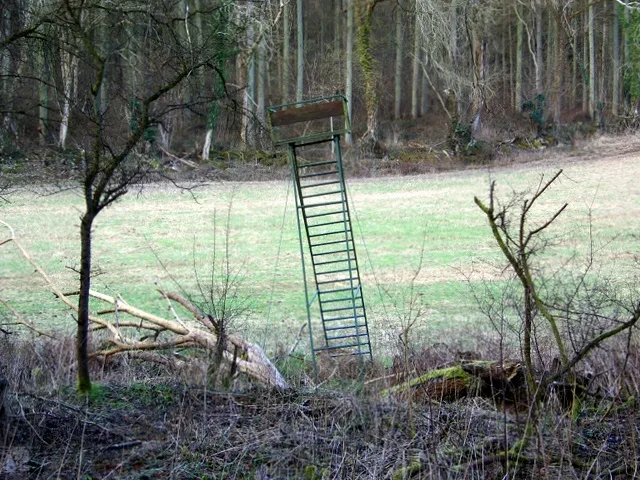
Walking a permission reveals the things that a map flattens out. The gateway that is wide enough for a quad but too narrow for a trailer. The low branch that will catch a high seat. The ditch that looks dry until you put a boot through the crust. The corner where the wind does something odd because of a shelter belt. The track that turns into a bog after a week of rain.
These are not minor details. They are the difference between a clean approach and a messy one. They tell you where game is likely to move, where you can park without blocking anything, and where you should not take a vehicle even if the landowner says you can. They also tell you where you might get stuck, which is a conversation nobody wants to have at dusk with a farmer who is already tired.
Take a notebook or use your phone. Mark gates, hazards, access points and boundaries. Draw a simple map if that helps. Keep it plain and keep it private. A permission map is not content.
The mile on foot and the mile in the truck
The truck gets you close. That is its job. But it also hides the ground. You arrive at speed, step out at the spot you already chose on a screen, and miss everything between the gate and the seat. Walking in forces you to read the wind, notice the sign, hear what is moving and arrive quietly. It also means you are less likely to churn a track or leave ruts that annoy the person who owns it.
None of that is an argument for being daft about it. If the ground is huge, the weather is foul, or you have a legitimate reason why walking is not practical, use the vehicle sensibly and with permission. The point is not to be a martyr. The point is that the default should be your boots, not your tyres. The mile on foot is usually the mile where you learn something.
Build a walking audit
A simple routine helps. First walk with the landowner or keeper, so you hear their version of the ground. Then walk it alone in daylight, following the boundaries and main routes. Go back in different conditions — after rain, in a cold wind, at first light if you can. Each lap adds a layer.
Note the access points, the gates, the stock, the public paths, the neighbours, the hazards and the places where you would not want to be seen. Note where you can safely extract something if the day goes well. Note where you cannot. Share the basics with the landowner if they are interested, but do not turn up with a laminated dossier unless they ask for one. Most people just want to know you have paid attention.
Relationships at stile speed
Walking your permission also puts you in the path of people. The farmer at the yard, the keeper on the quad, the neighbour walking a dog, the person fixing a fence. A quick, respectful chat does more for a permission than a dozen polished emails. Say who you are, remind them where you have permission, and ask if there is anything they would rather you avoided that week.
Do not outstay the welcome. Do not turn every chat into a request for more ground. Do not bring mates without asking. Do not leave gates open, litter, or a vehicle where it should not be. These are basic things, but they are the things that get permissions withdrawn.
The ground you keep
A permission is not really a document or a handshake. It is a relationship with a place and the people who look after it. Walking it before you work it is the simplest way to show that you understand the difference. It makes you safer, quieter and better prepared. More importantly, it turns a favour into a foothold — and a foothold is what keeps you coming back.