The Mercury Is Not the Enemy: Rebuilding Trust in a November Zero
November has a way of making a rifle feel different. The stock is colder, the moderator fogs when you breathe near it, and the fields you shot across in August now look like they belong to someone else. That does not automatically mean your zero has wandered. It means you should stop guessing and put a bit of paper in front of the muzzle.
Here at Letz Go Hunting, the useful question is not “does cold weather change zero?” It is “what does my rifle do, with my ammunition, on a cold morning, from a cold barrel?” That is a fieldcraft question, not a catalogue claim. And it is answerable in a morning without pretending you are running a ballistics lab.
Why a summer zero can move — and why it often does not
Temperature affects a few things at once. Powder burn rates shift slightly, barrel harmonics change, metal and stock materials expand and contract at different rates, and the person behind the rifle is usually wearing more layers. Add a moderator that has been screwed on and off since summer, a scope that has had a knock in the truck, or a new box of ammunition from a different lot, and you have plenty of small variables.
None of those variables guarantees a miss. A sensible deer rifle zeroed in July will often still be perfectly usable in November at UK stalking distances. But “often” is doing a lot of work in that sentence. If you are foxing at 150 metres in near-darkness, or taking a roe doe at the edge of a wood, you want to know rather than assume.
The other thing to separate is cold weather from a cold bore. A rifle that has been in a warm cab, then carried for an hour, is not the same as one that has sat in a cold slip all morning. The first shot from a clean, cold barrel is the one that matters most in the field. So test that shot, not just the tidy three-shot group that follows it.
The cheap audit: one target, three shots, no drama
Pick a range you can actually use legally and safely. A proper zeroing range is ideal; a rough track with a dodgy backstop is not. Take a sturdy rest, a known distance — 100 metres is the sensible UK default — and the exact ammunition you intend to use. Not the half-box from last season unless you have checked the lot and kept it properly.
Arrive early enough that the rifle can settle. Leave it in the slip, out of direct heat, while you set up. Do not warm it on the dashboard and then wonder why the first shot behaves oddly. Check the moderator is tight, the mounts are sound, the turrets are where you left them, and the bore is clear. Basic stuff, but basic stuff causes more bad groups than temperature ever will.
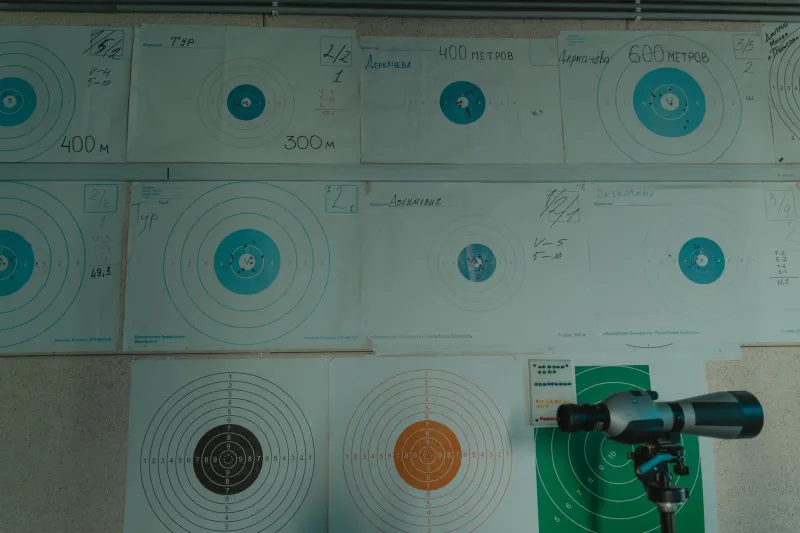
Fire one shot at a fresh aim point. Mark it. Then fire a three-shot group at a separate aim point. Let the barrel cool between shots if you are being fussy. The first shot tells you about your cold-bore point of impact. The group tells you whether the rifle and ammunition are behaving consistently. Those are two different pieces of information, and mixing them up is how people end up chasing a zero that was never broken.
If the group is tight but sitting an inch high and right, you have a zero question. If the group is scattered, stop adjusting. Check the loose screw, the shifting parallax, the rest, the shooter, the moderator, the ammunition. A wandering group is not a turret problem until you have ruled out the simple mechanical ones.
Reading the paper without fooling yourself
A single shot is not a group, and a group is not a zero. If your first cold shot lands close enough to your intended point of aim for the shooting you are doing, make a note and leave the turrets alone. If it is off by a margin that matters at your normal range, adjust deliberately, then confirm with another cold shot on a later trip. Do not twiddle, shoot, twiddle again, and call the last hole “proof”.
Wind matters more than many of us admit in November. A gusty day at 100 metres can push a group around just enough to make you blame the rifle. Use flags, grass, or a bit of survey tape. Write the wind down. And be honest about your rest: a wobbly plastic table is not a benchrest.
Also separate “zero” from “trajectory”. A ballistic app is useful for logging drop and wind, but it is not a substitute for seeing where your rifle actually puts a bullet. Your data should come from your paper, not from a screen.
A cold-bore routine for the 2026 season
Before you leave the house, keep the rifle and ammunition at a sensible, stable temperature. Avoid baking the case next to a heater. Check the moderator, mounts, and action screws. Put a note in your pocket with the date, temperature, ammunition lot, and scope settings. It sounds fussy until you need to compare November with January.
On the ground, do not zero on a live permission. Use a range or a safe, legal paper target with a proper backstop. If you are checking before a stalk, fire one cold shot at paper if you can, record it, and then go hunting with that knowledge. If you cannot check, do not invent confidence. Keep your shots within the range where you know the rifle behaves.
For foxing, the cold-bore shot is the one that usually matters. The first round of the evening is the one taken from a rifle that has been in and out of a vehicle, in cold air, with a moderator that may have picked up condensation. Know where that shot goes. For deer stalking, the same principle applies, but the margin for error is tighter and the consequences are higher. Be conservative.
What to log for next season
Write down more than group size. Note the date, outside temperature, wind, ammunition lot, moderator on or off, cleaning state, scope magnification, rest type, and the distance. Stick the target in a folder or photograph it. Record the cold-bore point of impact separately from the group. Over a season, you will build a picture of your own rifle that no internet forum can give you.
Recheck after any knock, any moderator change, any new ammunition lot, and any long journey where the rifle has been bumped around. Recheck before the rut, before the foxing season gets serious, and before you take on any shot that is longer than your usual. That is not paranoia. It is basic stewardship of the rifle and the quarry.
A November zero is not about fiddling until you feel better. It is about knowing where the first cold shot lands, proving it on paper, and writing it down. The mercury can do what it likes. Your job is to make sure your confidence is built on holes in a target, not on a summer memory.