Cold Truth: What a Thermal Actually Buys You in the Field
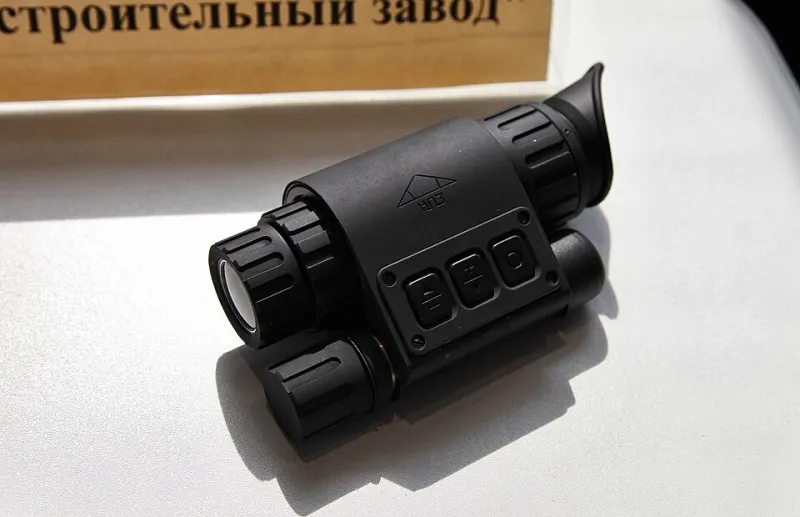
Photo: Vitaly V. Kuzmin, CC BY-SA 4.0, via Wikimedia Commons
There is a moment about ten minutes after you first switch a thermal on when you decide it is either the best money you have ever spent or a very expensive way of finding out how many cats live on your permission. Both reactions are honest. The mistake is believing it will make you a better hunter. It won't. It will make you a better seer, and those are not the same job.
One job, done properly
Strip away the marketing and a thermal imager does exactly one thing: it detects temperature difference and paints it on a screen. It does not tell you the wind, the range, the species, the legality or whether that heat blob behind the hedge has a keeper attached to it. All of that is still yours to work out, and no firmware update is coming to help.
Where it earns its place is in the four or five minutes you would otherwise spend walking a field edge with a lamp, educating everything within four hundred yards. That is a real gain, and it is worth paying for.
What the picture actually tells you
A fox at 250 yards is a bright shape. A fox at 250 yards behind a bramble patch is a bright shape with a bright shape in front of it, and the screen will not explain which is which. Learning to read a thermal is a skill in itself — reading the way a body cools, spotting the difference between a hare sitting tight and a muntjac doing the same, knowing that a shape which vanishes and reappears a yard later is moving and therefore alive.
Give yourself a fortnight of using one purely to observe before you use it to shoot. Take it out in daylight, in drizzle, in the hour before dusk. You will learn more about your ground in two walks than in a season of guesswork, and you will also learn where the device falls over.
The numbers that matter, and the ones that don't
Ignore the marketing pixel count on the box and go looking for three things: sensor resolution, pixel pitch and the lens. A 256 sensor will find animals; a 384 sensor will identify them at sensible foxing ranges; a 640 sensor is lovely and costs accordingly. Pixel pitch below 17 microns generally means a sharper image in a smaller body, but only if the lens is decent.
Networking detail resolution is the figure that actually predicts performance, and most manufacturers bury it. Ask for it.
Refresh rate matters more than people admit. Fifty hertz is the sensible floor for anything moving. Twenty-five hertz looks fine on a static test target and then smears when a rabbit shifts gear, which is exactly when you want clarity.
Batteries, and the cold that eats them
A thermal that dies at 9pm is a £900 paperweight. Cold drains lithium cells hard, and a device left in a truck bed at minus two will not give you the runtime on the box. Carry a spare, keep it inside a jacket, and get into the habit of charging the night before rather than the morning of. If the unit takes external power, a small power bank in an inner pocket is cheap insurance.
Also check the dioptre adjustment before you leave the house. Nothing wastes a session like discovering at the critical moment that the screen is a blur.
The legal line you must not cross
A thermal is a seeing tool. It confers no permission whatsoever.
In England and Wales, deer may not lawfully be taken at night, and using thermal to find deer in darkness and then shoot them under a lamp is still taking deer at night. Scotland has its own authorisation regime, and it is not a workaround. Foxes and rabbits sit under different rules again, but the landowner's permission, the general licences where birds are concerned, and the Night Poaching Act 1828 all still apply exactly as they did before you unboxed anything. If in doubt, ring BASC or your equivalent body and get it in writing. 'I thought thermal was exempt' has never once been a defence.
The woodcraft it quietly erodes
Here is the uncomfortable bit. Thermal is so good at finding animals that it can replace the skills that made you good at finding them. Why read a hedge for runs when the screen shows you the rabbit? Why learn a fox's route when you can sweep a field?
That trade is fine until the battery dies, the weather closes in, or you are on ground where the device stays in the bag. Keep the old skills sharp. Walk the ground on foot in daylight, learn the crossing points, note where the droppings are. The thermal confirms what your reading of the ground already suspected. That is the right order of things.
Sensible buying in 2026
- Under £400: a monocular that will find things at 100–150 yards. Genuinely useful for ratting and close rabbit work.
- £500–£1,000: the sweet spot. 384 sensor, 50Hz, decent lens. This is where most UK field shooters should be looking.
- £1,200 and up: 640 sensor and better glass. Worth it if you are doing serious foxing on big arable ground several nights a week.
Buy second-hand with care — check the sensor for dead pixels against a uniform wall, confirm the warranty transfers, and ask how many charge cycles the battery has seen.
Bottom line
Buy a thermal to see better, not to skip the hard parts. Used that way it is one of the most useful bits of kit to arrive in UK field shooting in a generation. Used any other way it is a shortcut that leads somewhere you don't want to be, legally or otherwise.