The Bit Nobody Photographs: Planning Your Deer Extraction Like a Professional
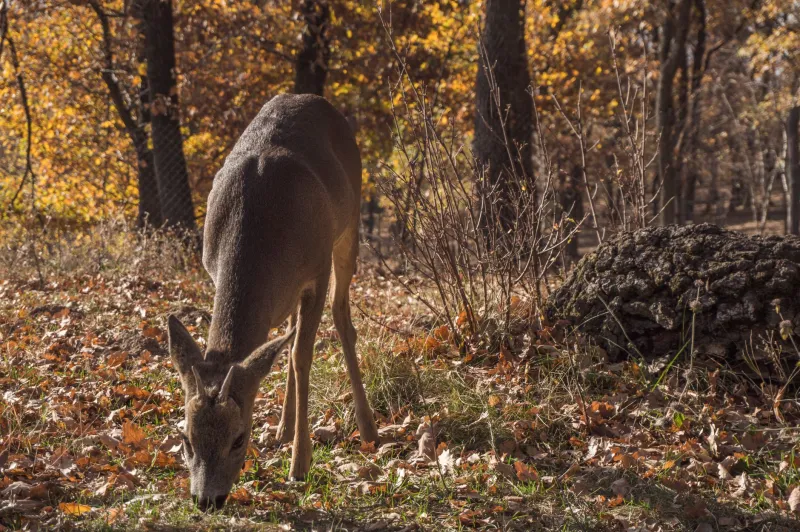
There's a moment in every stalk when the crosshair settles and the world narrows to a patch of fur and a breath. It's the part everyone talks about in the pub afterwards. What nobody photographs is the twenty minutes after the shot: the sweat, the foul language, the barbed wire, the mud, and the slow realisation that the deer has fallen in exactly the one spot on the permission you can't get a vehicle to.
That's not bad luck. That's a planning failure — and it's one you can fix before you ever leave the truck.
The shot is the easy part
A clean kill is a technical skill. Getting a fallow pricket out of a boggy birch wood in the dark, through a gate that's wired shut, without leaving a trail of disturbance the landowner will notice at first light — that's a professional skill. It's also the bit that decides whether you get invited back next season.
The mistake a lot of us make is treating recovery as something you improvise. You stalk in, you take the shot, you deal with the consequences. But the best deer managers I know do the opposite: they decide on the extraction route first, then work backwards to a shooting position that feeds into it. The deer is the variable. The ground isn't.
Recce the ground for the way out, not just the way in
When you walk onto a new permission, most people look for deer sign — slots, droppings, fraying, the usual. Do that, by all means. But spend just as long looking at the ground with a carcass in mind.
Ask yourself a few blunt questions. Where does the ground drain? Where does it hold water? Which gates actually open, and which are tied shut with baler twine that's been there since the last century? Is there a track wide enough for a quad, or a footpath the public use on a Sunday morning? Where are the cattle, and will they follow a dragged carcass like a magnet? Is there a ditch, a stone wall or a fence line that turns a straight line into a two-hundred-yard detour?
Mark the useful things on a phone map or in a notebook — gate widths, vehicle access points, a firm bit of hardstanding near the road. It takes ten minutes in daylight and saves an hour in the dark.
Know what you're dragging and how
Roe and muntjac are a one-man job on most ground. A fallow pricket is manageable with a decent drag handle and a bit of technique. A mature red stag is a different conversation entirely — that's a two-person job, a sledge, or a vehicle, and preferably all three.
There's no shame in a sledge or a barrow. The old-school attitude that a real stalker carries a red stag on his shoulders belongs in the same drawer as smoking indoors. A plastic sled, a purpose-made deer drag, or a folding barrow will save your back, your temper and the carcass. Drag on firm ground where you can, lift over fences rather than dragging under them, and never pull a carcass through standing water or across a freshly drilled field if there's any alternative.
If you're on your own, tell someone where you are and when you expect to be back. A dead deer is heavy, awkward and completely uncooperative, and a twisted ankle two fields from the truck is a genuinely serious situation.
The larder clock is always ticking
A deer isn't a piece of scenery. Once it's on the ground, the clock starts. In mild November weather — and we've had plenty of those in recent years — a carcass will cool far more slowly than people assume, especially a big fallow or red. The gralloch needs doing promptly and cleanly, and the carcass needs to be in a chiller as soon as reasonably possible.
That means the extraction route and the larder run are the same plan. If the chiller is forty minutes away and you've shot at last light, the maths has to work. If it doesn't, you either don't take the shot or you have a genuine plan B — a local larder, a cool outbuilding, a colleague who can meet you.
Gralloching in the field is fine when it's done properly, but do it somewhere sensible: away from the shot site, away from watercourses, and with everything you bring in going back out with you. Green gralloch, gloves, wipes — it all leaves the ground.
Leave the ground as you found it — only better
Landowners remember the little things. They remember the gate that was left open, the fence that got leaned on until the wire sagged, the deep tyre ruts in the gateway in February. They also remember the stalker who rang to say he'd be on the ground, who texted when he was off, and who left no trace except a slightly lighter deer population.
So before you shoot, think about what the ground will look like afterwards. Blood on a footpath, a drag mark across a lawn, a spent case glinting in the grass — none of it is a disaster, but all of it is avoidable with a bit of forethought. Pick up your brass. Drag on ground that recovers. Avoid the paddock and the lawn. Close every gate you open, and if it was tied, tie it again properly.
If the deer falls somewhere awkward — a ditch, a steep bank, the wrong side of a fence — don't panic and start hauling. Stop, think, and take the route that does the least damage to the ground and the most good to the carcass. Sometimes that means a longer walk for a cleaner drag.
Build the habit
The stalkers who make it look easy aren't luckier than the rest of us. They've just built the habit of thinking one step ahead. They know their ground, they know their limits, and they know that the shot is only the first third of the job.
So next time you're on the road, before you've even glassed the first field, ask yourself the question: if I pull the trigger here, how does this deer get to the larder? If you can't answer it in detail, you're not ready to shoot. Fix that first — and the rest of the stalk will look after itself.